
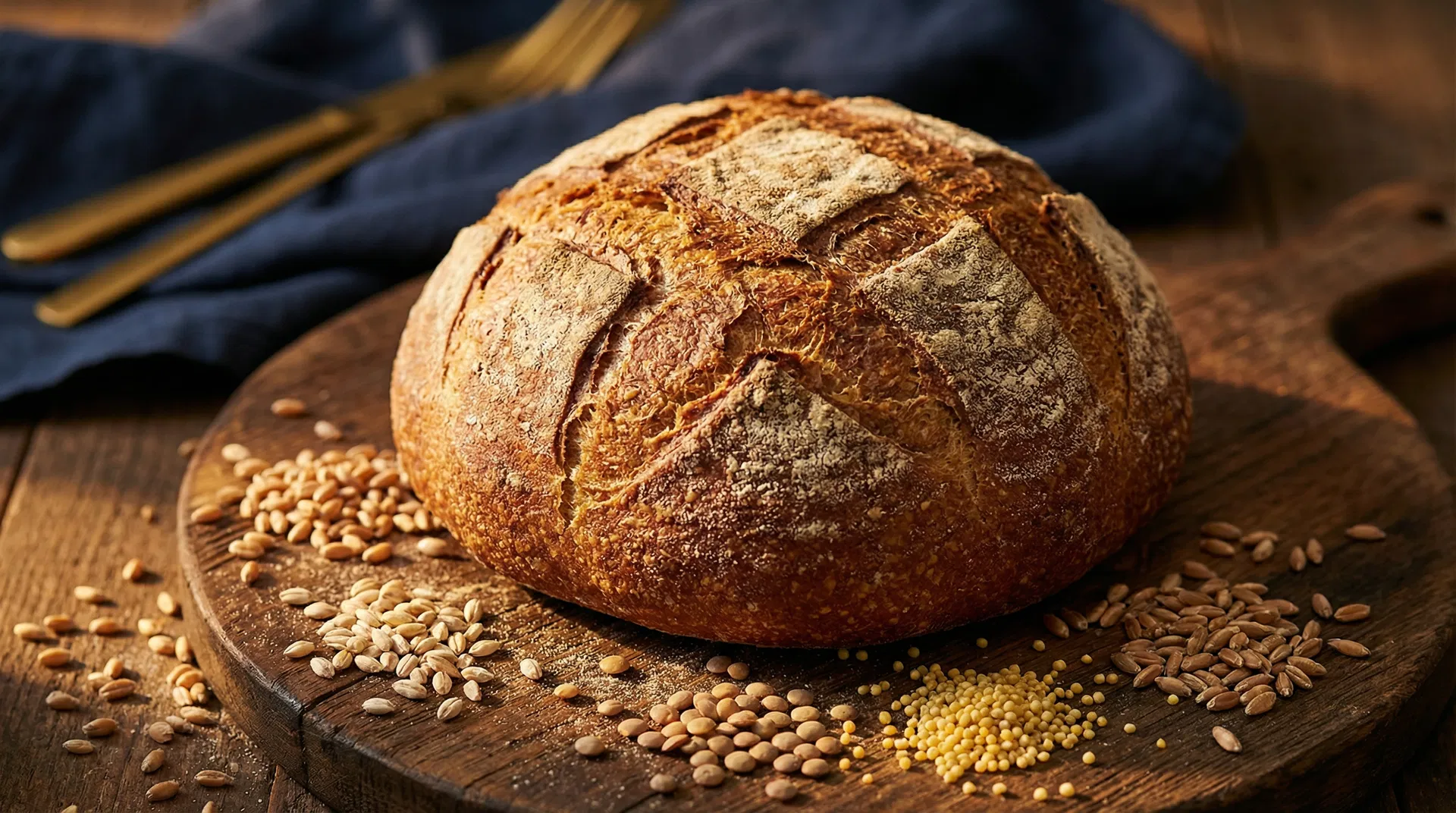
The Ancient Wisdom of Ezekiel Bread
Complete Nutritional Mastery
Discover the profound history and nutritional wisdom of Ezekiel bread. From the biblical recipe in Ezekiel 4:9 to modern artisan baking, we explore how ancient grains and legumes create a complete, nourishing loaf that honors thousands of years of tradition.
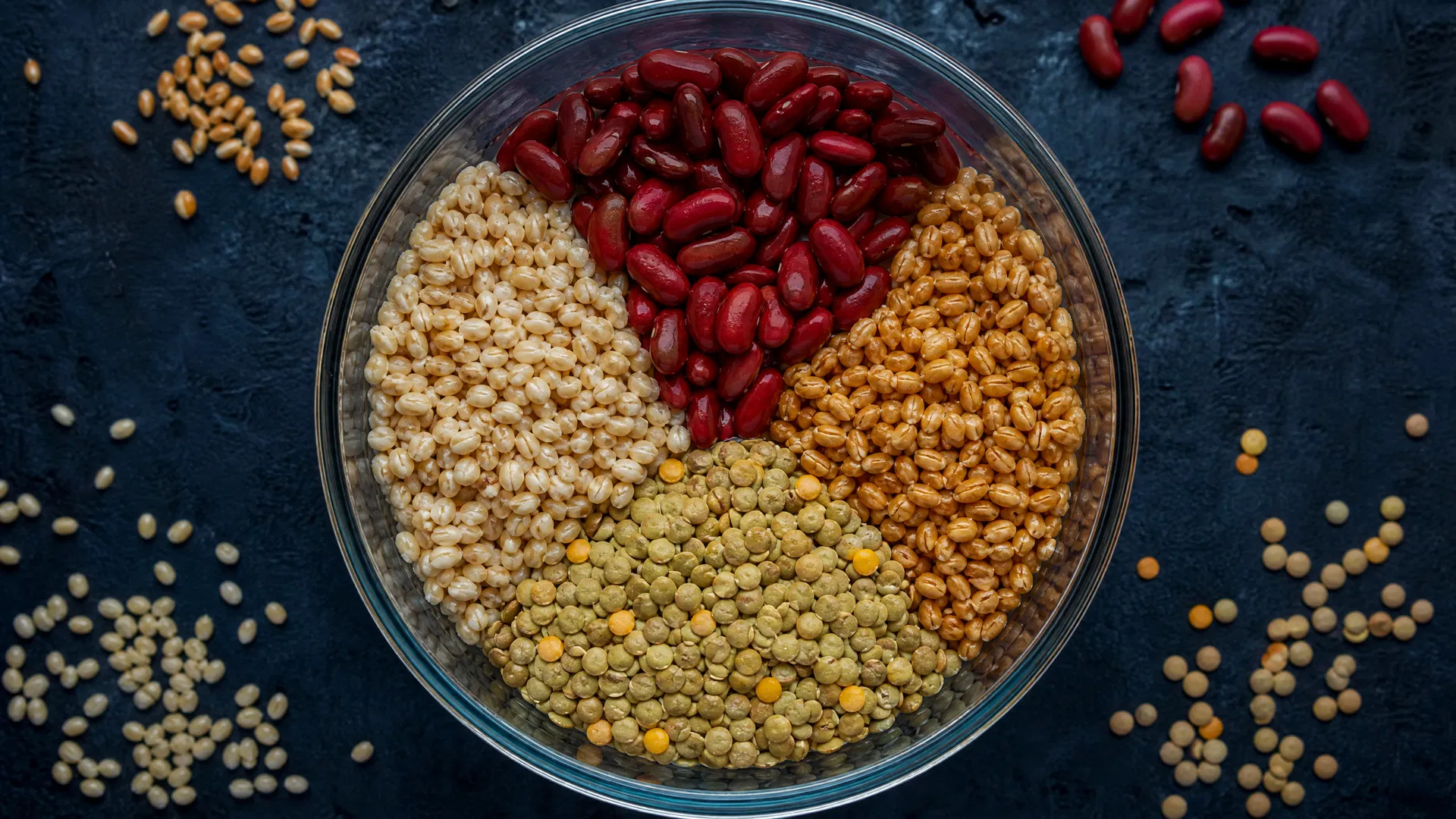
All 6 ancient grains and legumes ready for soaking - wheat berries, barley, lentils, kidney beans, millet, and spelt
Introduction to Ezekiel Bread
Ezekiel bread is one of the most nutritionally complete breads you can bake. Named after the biblical recipe in Ezekiel 4:9, this ancient formula combines six grains and legumes to create a complete protein profile—a rarity in bread baking.
What makes Ezekiel bread special is not just its nutritional completeness, but the deep flavor and texture that comes from the combination of sprouted grains. When properly fermented, Ezekiel bread develops a complex, slightly sweet flavor with a dense, nourishing crumb that keeps you satisfied for hours.
This ancient recipe has been passed down through generations because it works. Modern nutritional science confirms what ancient peoples knew: these six ingredients together create something extraordinary.
Mr. Munet's Rundown
Taste:
Complex, slightly sweet, nutty with deep grain flavor
Texture:
Dense, moist, chewy crumb with excellent keeping quality
Difficulty:
Intermediate - requires precision and patience
Why Make This:
Complete protein, nutritional powerhouse, deeply satisfying
Ezekiel 4:9: The Divine Recipe
"Take wheat and barley, beans and lentils, millet and spelt; put them in a storage jar and use them to make bread for yourself."
This biblical recipe has been followed for thousands of years, and modern nutritional science confirms why: these six ingredients together create a complete protein containing all nine essential amino acids. This is extraordinary for a plant-based food.
Each ingredient brings unique nutritional benefits:
- Wheat: Gluten structure and carbohydrates
- Barley: Beta-glucans for heart health
- Lentils: Plant-based protein and iron
- Kidney Beans: Fiber and resistant starch
- Millet: Minerals and gluten-free grain
- Spelt: Ancient grain with complex flavors
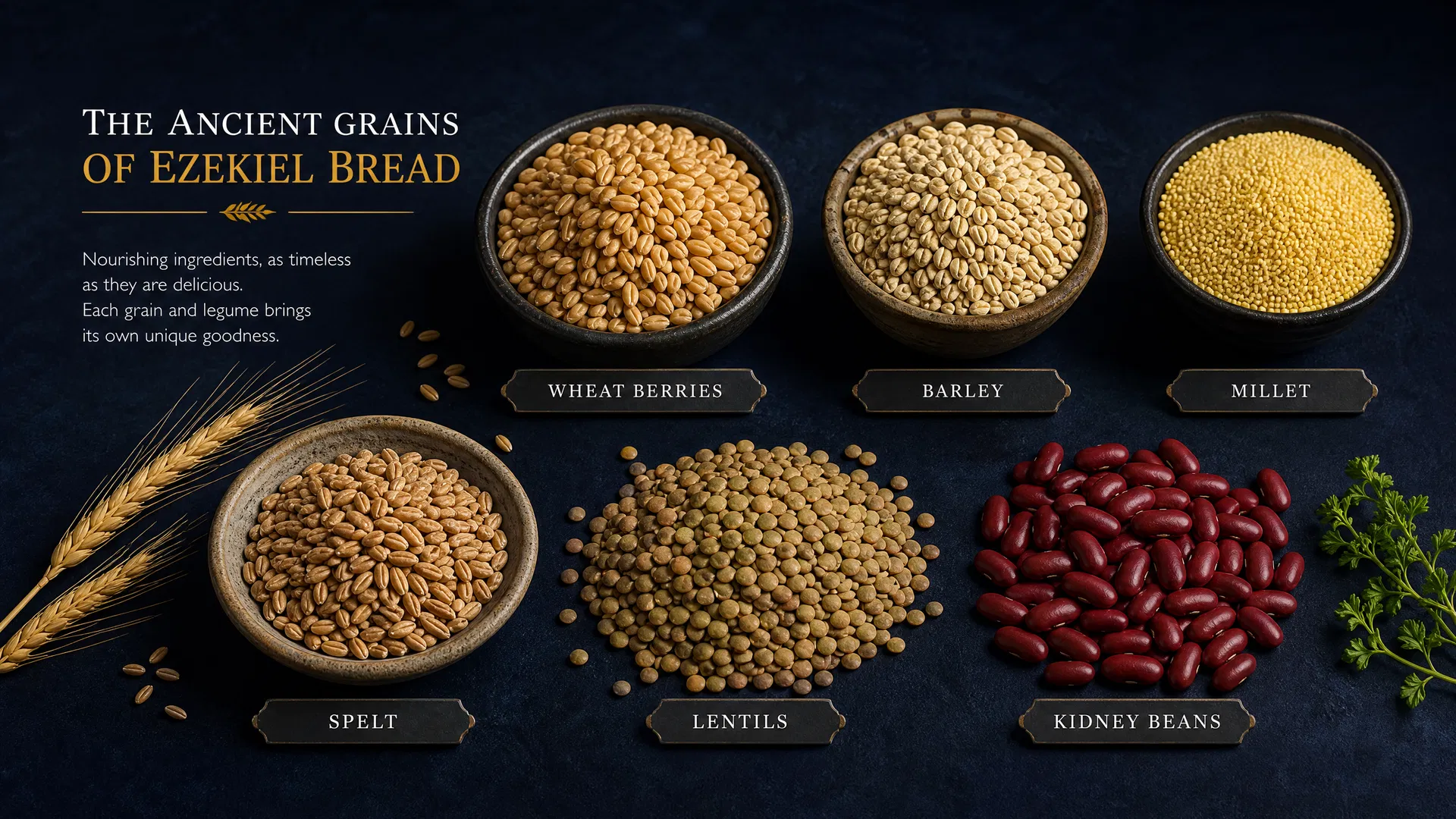
The Ancient Grains of Ezekiel Bread - Each ingredient brings unique nutrition and flavor
Complete Recipe: Ezekiel Bread
Ingredients
Grains & Legumes (Soaked):
- 50g wheat berries
- 50g barley
- 50g millet
- 50g spelt
- 100g lentils
- 100g kidney beans
Dough:
- 400g bread flour
- 250ml filtered water
- 10g sea salt
- 5g instant yeast (or 100g active starter)
Step-by-Step Instructions
Step 1: Soaking the Grains (12-24 hours ahead)
Measure out all grains and legumes. Rinse thoroughly under filtered water until water runs clear. Place in a large bowl and cover with filtered water (about 3 times the volume of grains). Let soak for 12-24 hours at room temperature. This activates enzymes and improves digestibility.
Step 2: Draining & Preparing
After soaking, drain the grains completely using a fine-mesh strainer. Rinse one more time. The grains should be damp but not wet. Set aside.
Step 3: Mixing the Dough
In a large bowl, combine bread flour, filtered water, salt, and yeast. Add the drained soaked grains. Mix until a shaggy dough forms. The dough will be quite stiff due to the grains. Use a sturdy spoon or your hands.
Step 4: Bulk Fermentation (4-5 hours)
Perform 4 sets of stretch and folds at 30-minute intervals. After the last set, let the dough rest undisturbed for 2-3 hours until it increases by 50-75% in volume. The dough should be bubbly and jiggly.
Step 5: Shaping
Turn dough onto a lightly floured surface. Pre-shape into a round, rest for 20 minutes. Final shape into a boule or batard. Place seam-side up in a banneton basket lined with parchment paper.
Step 6: Cold Proof (8-16 hours)
Cover the banneton and place in the refrigerator for 8-16 hours. This develops flavor and makes scoring easier.
Step 7: Baking
Preheat Dutch oven to 500°F for 45 minutes. Remove dough from fridge, score with a lame, and carefully transfer to hot Dutch oven. Bake covered for 20 minutes, then uncovered for 25-30 minutes until deep golden brown. Internal temperature should reach 205-210°F.
Step 8: Cooling
Remove from Dutch oven and cool on a wire rack for at least 1 hour before slicing. This allows the crumb to set properly.
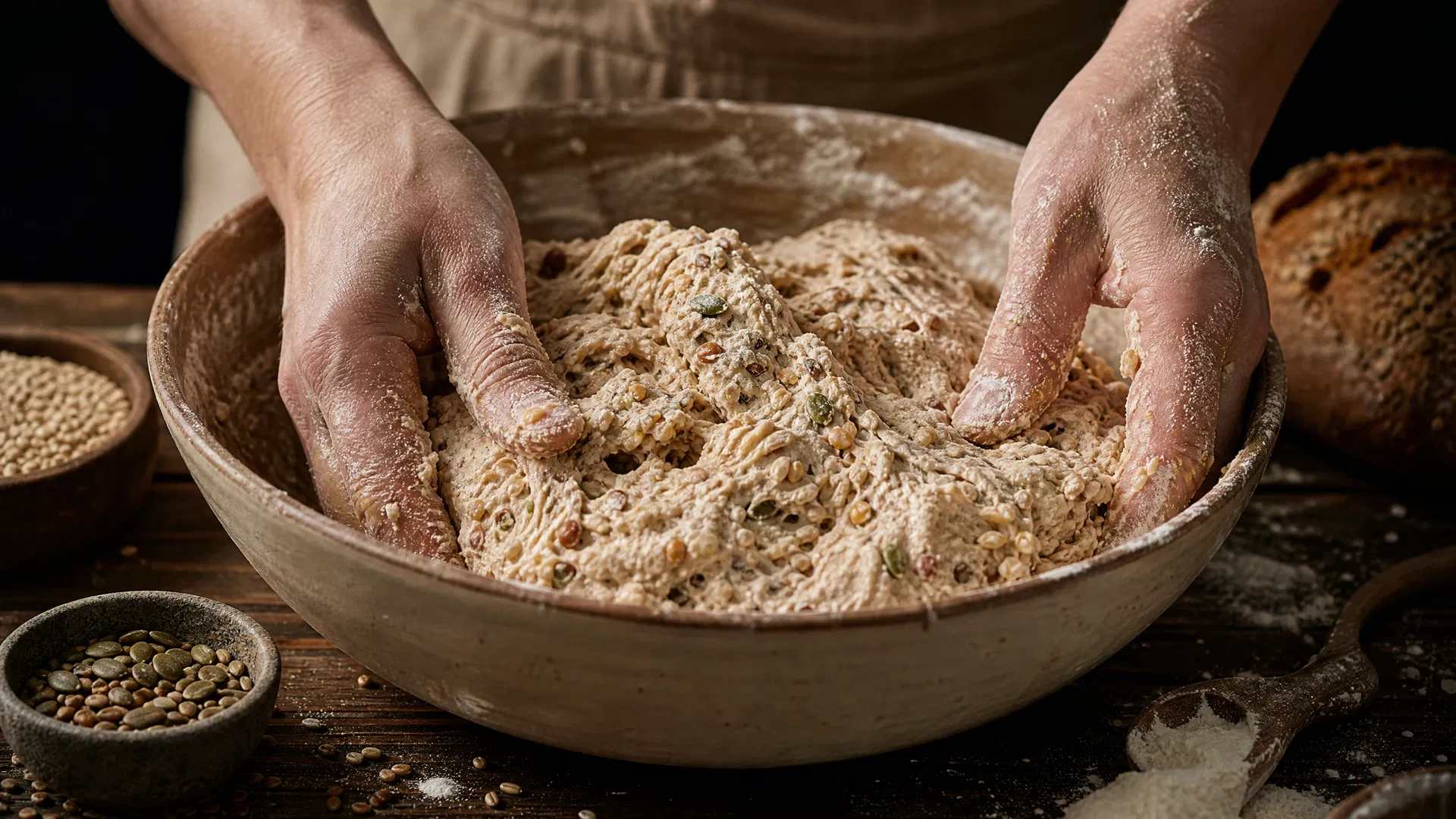
Mr. Munet mixing the ancient grains - combining soaked ingredients into a cohesive dough
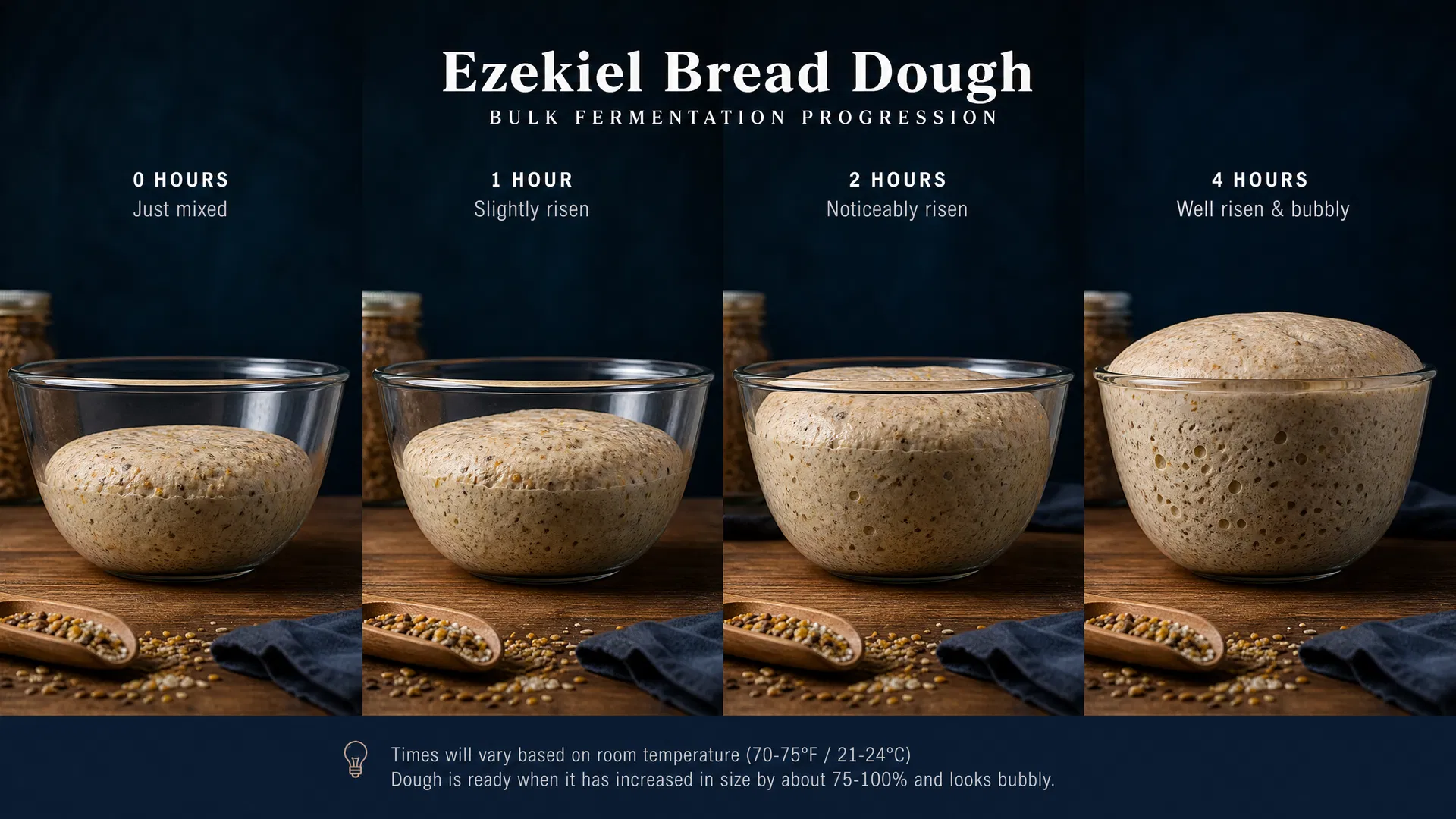
Bulk Fermentation Progression - 0 hours (just mixed) → 4 hours (well risen and bubbly)
Troubleshooting Guide
Dough is too stiff
The soaked grains absorb water. Add water gradually (1 tablespoon at a time) during mixing if needed. Don't add too much or the dough becomes sticky.
Bread is too dense
Ensure bulk fermentation reaches 50-75% rise. Don't rush this step. The grains are heavy, so fermentation takes longer than regular sourdough.
Grains not cooked through
Soak grains for full 24 hours. This softens them significantly. If still hard, extend soaking time or soak in warm water instead of room temperature.
Bread spreads too much (no oven spring)
Reduce cold proof time or use a stronger starter. The dough may be over-proofed. Aim for 8-12 hours in the fridge, not 16+.
Crust is too thick
Reduce baking time or lower oven temperature by 25°F. Ezekiel bread has a naturally thicker crust due to the grains, but 25-30 minutes uncovered should be sufficient.
Advanced Techniques
Sprouting the Grains
For maximum nutrition and digestibility, sprout the grains before soaking. After soaking, drain and rinse 2-3 times daily for 2-3 days until small sprouts appear. This increases enzyme activity and nutrient bioavailability.
Using Whole Grain Flour
Replace 50-100g of bread flour with whole wheat or spelt flour for deeper flavor and additional nutrition. This will make the dough slightly denser, so increase hydration by 5-10%.
Extended Cold Fermentation
For even more complex flavor, extend cold proof to 24-48 hours. This develops more organic acids and creates a more complex sourdough-like flavor profile.
Scoring Patterns
Experiment with different scoring patterns. The dense dough of Ezekiel bread holds scores beautifully. Try cross-hatching, curved patterns, or leaf designs for visual interest.
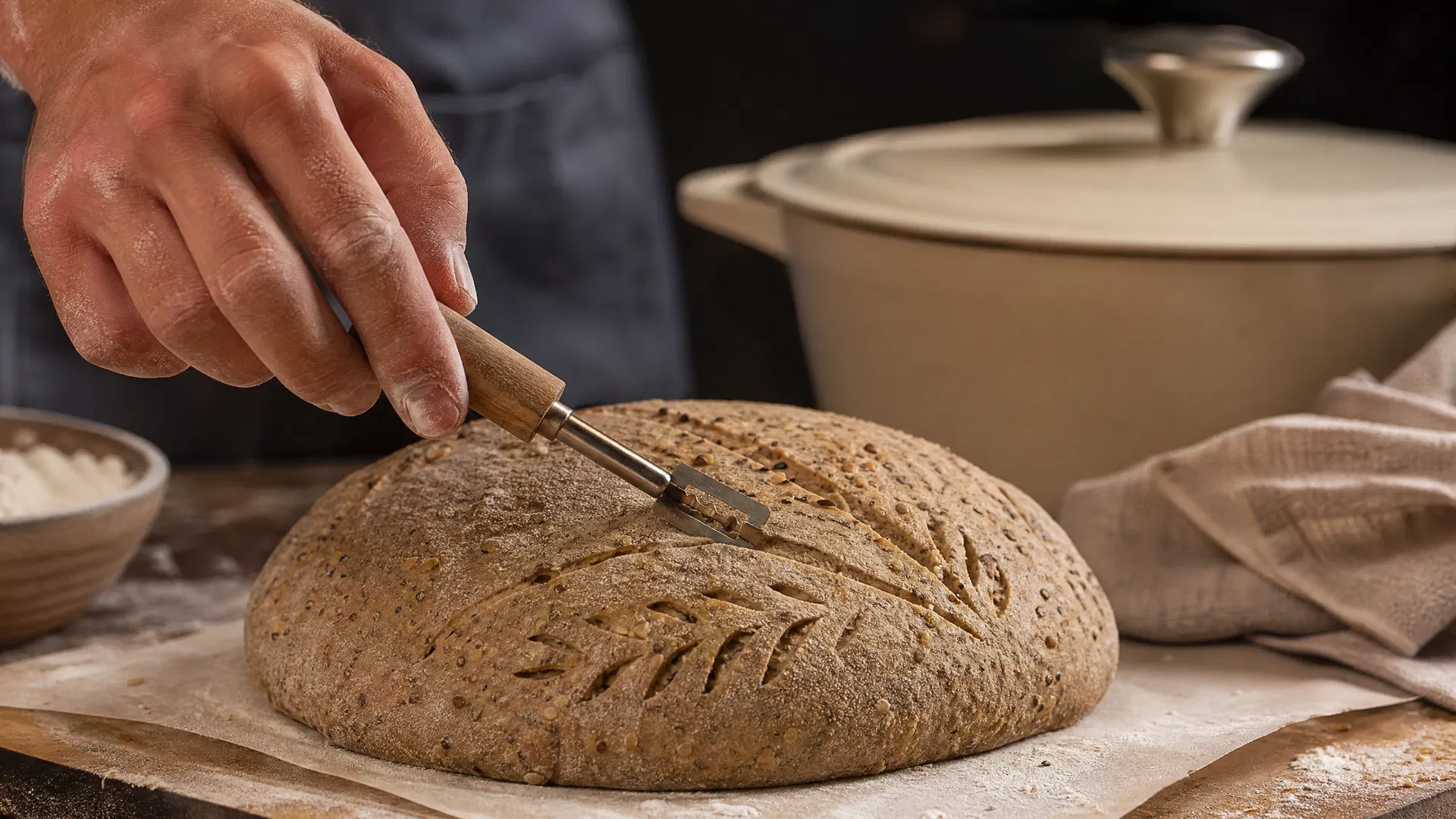
Scoring the dough before baking - creating beautiful patterns for oven spring
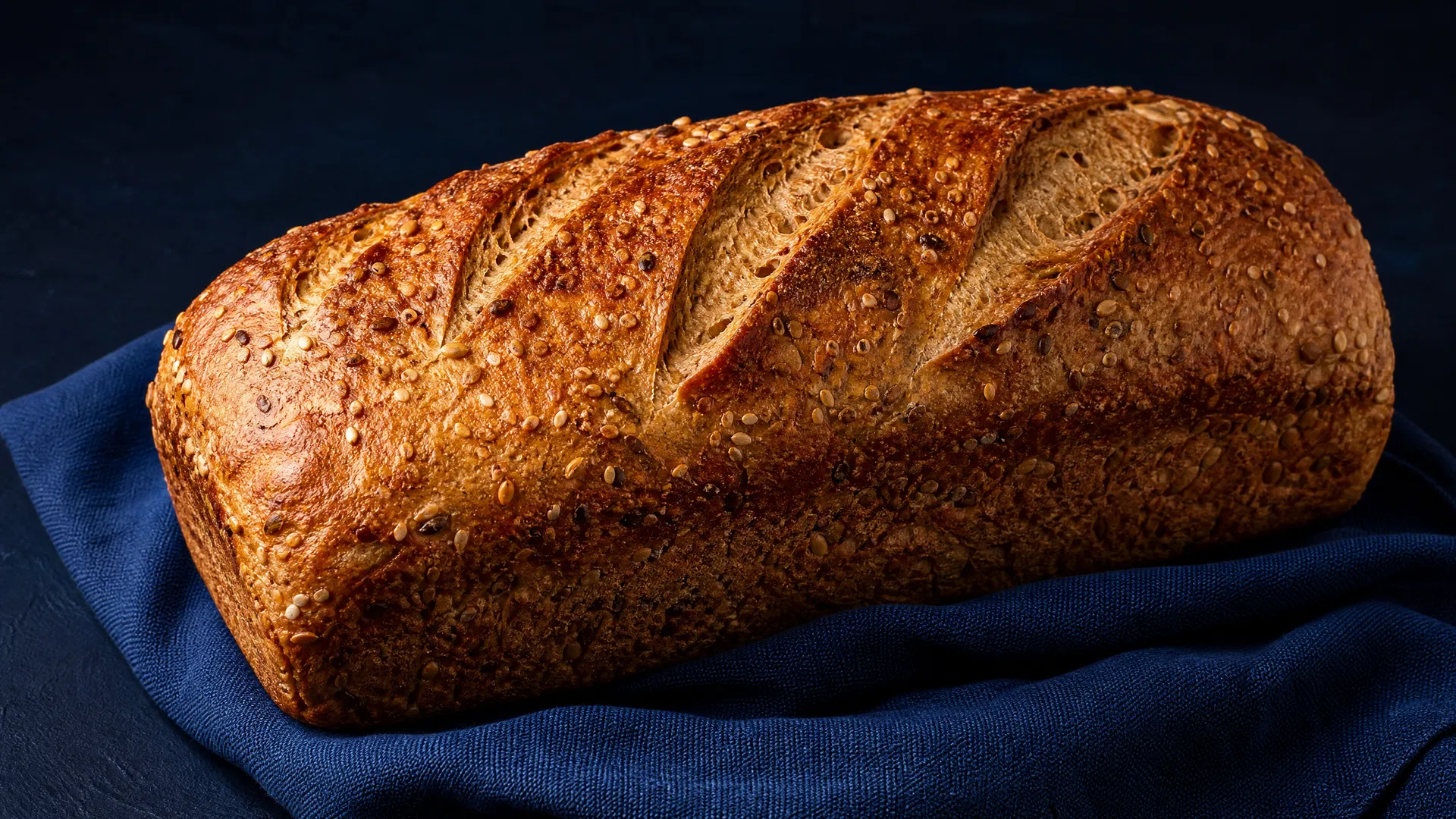
The finished Ezekiel bread loaf - golden-brown crust with beautiful scoring marks and dense, nourishing crumb
Storage & Longevity
Ezekiel bread keeps exceptionally well due to its dense crumb and high moisture content.
- Room Temperature (2-3 days): Store in a paper bag or breadbox to maintain crust
- Refrigerator (1 week): Wrap in plastic to prevent drying. Slice before storing for easy access
- Freezer (3 months): Slice and freeze in airtight container. Toast directly from frozen
Nutritional Powerhouse
One slice (50g) of Ezekiel bread contains:
- ✅ Complete protein (all 9 essential amino acids)
- ✅ High in fiber (supports digestive health)
- ✅ Rich in minerals (iron, magnesium, zinc, phosphorus)
- ✅ Lower glycemic index than regular bread
- ✅ Sprouted grains (easier to digest)
- ✅ B vitamins (energy production)
Essential Tools for Ezekiel Bread

Letron Food Scale - 33 lb / 0.1 oz High Precision
$29.99
Essential for accurate Ezekiel bread baking. 33 lb capacity with 0.1 oz precision. Rechargeable battery, built-in timing function, 7 units of measurement. Perfect for measuring soaked grains and dough with accuracy. Professional-grade reliability.
ASIN: B0H3DSWV6M
View on Amazon
Bread Story Round Banneton Proofing Basket - 10 Inch
$24.99
Complete banneton set for Ezekiel bread proofing. Includes 10-inch round basket, removable cloth liner, and eBook with sourdough baking tips. Perfect for cold proofing overnight. The cloth liner prevents sticking with dense doughs like Ezekiel bread. Professional quality at affordable price.
ASIN: B06XGBSCGB
View on Amazon
Amazon Basics Enameled Cast Iron Dutch Oven - 5.5 Quart
$39.99
Professional bread baking vessel. 5.5 quart capacity, oven safe to 500°F. Heavy-duty cast iron with smooth enamel coating ensures even heat distribution and perfect oven spring for Ezekiel bread. Essential for trapping steam during baking, creating the signature crust and crumb structure.
ASIN: B073Q9WV8S
View on AmazonBaker's Notes
- Temperature matters: Keep your kitchen at 70-75°F for consistent results. Warmer kitchens will ferment faster.
- Hydration is lower: Ezekiel bread naturally has lower hydration due to the grains. Don't try to make it wetter.
- Patience is key: The dense dough takes longer to ferment. Trust the process and don't rush.
- Grains must be soft: If grains are still hard after baking, extend soaking time next time.
- Flavor develops over time: This bread tastes better on day 2-3 as flavors meld together.
Mr. Munet's Final Thoughts
Ezekiel bread is more than just bread—it's a connection to thousands of years of nutritional wisdom. When you bake this loaf, you're honoring an ancient recipe that has nourished civilizations. The combination of grains and legumes creates something truly special: a bread that satisfies both body and soul.
The first time you bite into a slice of Ezekiel bread you've made yourself, you'll understand why this recipe has survived millennia. The complex flavors, the nourishing crumb, the satisfaction it brings—this is bread at its most profound.
Take your time with this recipe. Let the fermentation happen naturally. The reward is a loaf of extraordinary depth, nutrition, and flavor.
Ready to Bake Ezekiel Bread?
Get the complete recipe, baker's notes, hydration calculator, and troubleshooting guide. Everything you need to master this ancient bread.
Related Articles
Want to save this recipe?
Enter your email and we'll send you the full recipe PDF plus a free bonus recipe from Los Munet's Bakery.